7 Reasons Your Coffee Doesn’t Taste Like a Café’s
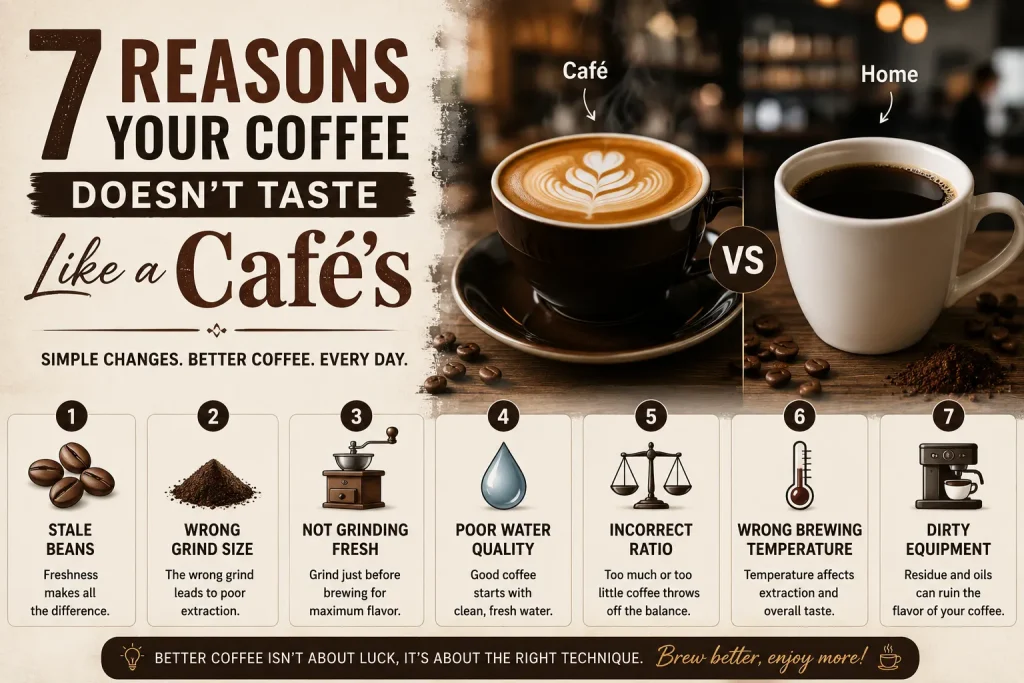
Ever brewed a fantastic-looking cup at home, using what you thought were premium beans, only to find it still doesn’t quite match the incredible taste from your favorite caf? You’re definitely not alone. Many of us struggle to replicate that rich, balanced, and wonderfully flavorful caf experience in our own kitchens. The truth is, creating a truly delicious cup of coffee isn’t just about the quality of the beans; a host of factors come into play that can significantly affect the final taste. Let’s explore seven common reasons your home brew might not be hitting the mark-and how you can easily fix them. You’re Using Stale Coffee Beans Freshness is king when it comes to coffee. Many of us tend to buy larger bags of beans and use them for weeks, or even months, after opening them. This is a big mistake! Coffee beans start losing their flavor and aroma quite soon after they are roasted. To get the best results, purchase freshly roasted beans and aim to use them within two weeks of opening the bag. Pro Tip: Store your coffee beans in an airtight container, away from any heat, moisture, or direct sunlight. Your Grind Size Is Incorrect Different brewing methods demand different grind sizes. Using the wrong size for your chosen brew can lead to poor extraction, which in turn can result in a bitter, sour, or weak cup. Generally speaking: An even grind size is crucial to ensure that the water extracts flavor evenly from all the coffee grounds. You’re Not Grinding Fresh Many high-quality cafs grind their coffee beans right before brewing them. If you’re using pre-ground coffee, you’re automatically missing out on a huge amount of flavor. Grinding your beans just before you brew preserves all those volatile aromatic compounds that make coffee taste so vibrant and complex. Pro Tip: Investing in a quality burr grinder will give you a much more consistent grind and significantly improve your coffee’s flavor. Your Water Quality Isn’t Ideal Did you know that coffee is about 98% water? This means the quality of your water has a massive impact on the final taste of your coffee. Tap water can contain minerals, chlorine, or other impurities that can negatively affect the flavor profile of your brew. Cafs typically use filtered water to maintain consistency. Pro Tip: Use fresh, filtered water for your coffee whenever possible. You’ll notice a difference! Your Coffee-to-Water Ratio Is Off One of the most common errors made by home brewers is simply eyeballing the amount of coffee and water used. Too much coffee will create an overly strong and bitter cup, while too little coffee will result in a weak, watery brew. A good starting point for most brewing methods is: Using a digital scale will help you be consistent and fine-tune your brewing process. Your Brewing Temperature Is Wrong Water temperature is another critical factor for coffee extraction. If the water is too hot, it will over-extract the coffee, leading to a bitter taste. If it’s too cool, the coffee won’t be fully extracted, resulting in a sour or underdeveloped flavor. Professional cafs meticulously control brewing temperatures to get the best flavor out of every bean. Ideal Brewing Temperature: Between 90°C and 96°C (195°F and 205°F). Your Equipment Needs Cleaning Even the highest quality coffee beans can’t overcome dirty equipment! Coffee oils and residue build up over time on grinders, coffee makers, French Presses, and espresso machines. These leftover oils can become rancid and impart a unpleasant taste to your coffee. Pro Tip: Clean all your brewing equipment regularly, following the manufacturer’s instructions, to keep every cup tasting fresh. How Cafs Achieve Better Coffee The key to excellent coffee in a caf is consistency. Baristas carefully control every element, from the freshness of the beans to the grind size, water quality, brewing temperature, and extraction time. They are also trained to adjust their methods based on the specific coffee they are using. The great news is that you can implement many of these same principles at home without needing to invest in commercial-grade equipment. Final Thoughts If your coffee at home doesn’t quite taste like it does from a caf, the most likely culprits aren’t your beans-they’re your brewing techniques. Even small adjustments, like using freshly roasted beans, grinding just before brewing, measuring accurately, and keeping your equipment clean, can make a huge difference in the final cup. By understanding and avoiding these seven common mistakes, you’ll be well on your way to enjoying café-quality coffee right in your own kitchen. At The House of Coffee, we’re passionate about helping you discover the joy of truly delicious coffee, every single day.